Asheville Homeowner’s Guide to Mold After Hurricane Helene Flooding
Asheville Homeowner’s Guide to Mold After Hurricane Helene Flooding
By Dumpster Rental Asheville · 2026
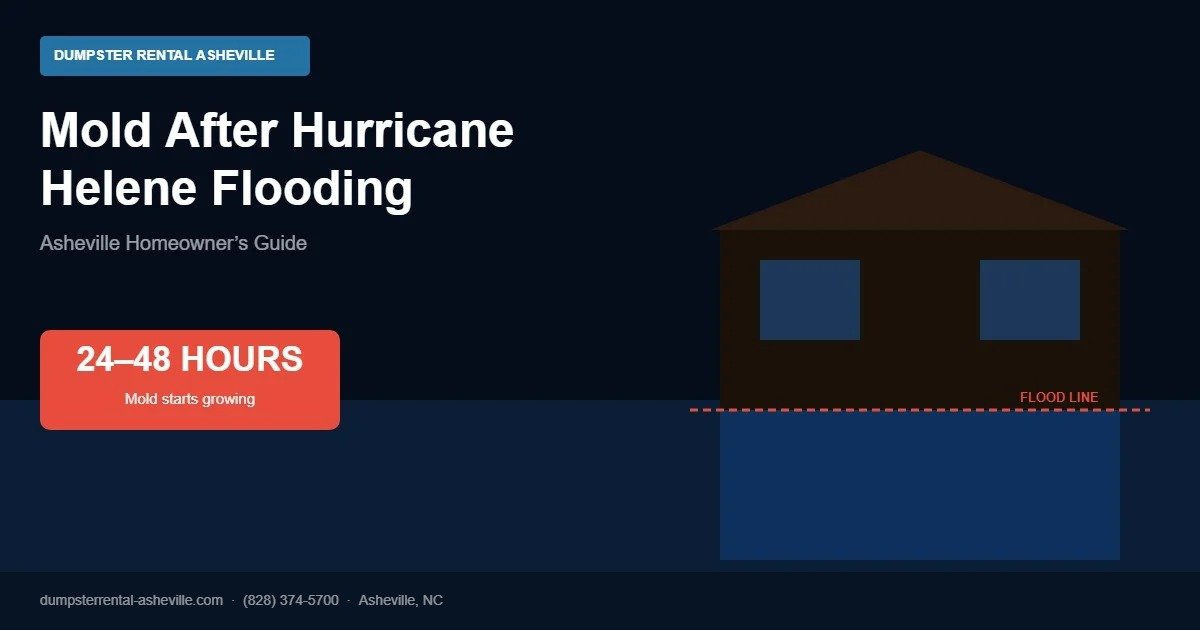
Mold grows within 24–48 hours of water exposure. In Asheville’s warm, humid Blue Ridge climate, mold spreads rapidly through wall cavities, subfloors, and framing after flooding. If your home was affected by Hurricane Helene and still has flood-damaged materials in place, the mold situation is already serious — and gets worse every week you wait.
This guide covers what Asheville homeowners need to know about mold after Hurricane Helene flooding: how quickly it spreads, what materials are most at risk, when to call a remediation professional, and the critical role that fast debris removal plays in stopping mold before it reaches your framing.
How Mold Spreads After Helene Flooding in Asheville Homes
Mold requires three things: moisture, organic material (drywall, wood, insulation), and time. After Helene, Buncombe County homes had all three in abundance. The timeline goes faster than most homeowners expect:
- 24–48 hours: Mold spores begin germinating on wet surfaces — drywall paper, insulation facing, wood framing
- 3–7 days: Visible mold colonies appear on drywall paper and wood surfaces; musty odor becomes detectable
- 2–4 weeks: Mold penetrates drywall and begins colonizing framing, subfloor, and wall cavity insulation
- 1–3 months: Structural framing may be compromised; HVAC contamination possible if mold reaches air handler or ductwork
- 6+ months: Widespread structural mold requiring demolition and replacement of framing, not just surface remediation
The difference between a $3,000 remediation job and a $25,000 structural mold project often comes down to how quickly the damaged materials were removed after flooding.
Which Flood-Damaged Materials Grow Mold Fastest
Not all flood-damaged materials are equal in terms of mold risk. Here’s how to prioritize what comes out first:
| Material | Mold Risk | Action |
|---|---|---|
| Drywall (paper-faced) | Very High | Remove immediately — cannot be dried, must be replaced |
| Fiberglass batt insulation | Very High | Remove immediately — traps moisture, cannot be dried |
| Carpet and pad | Very High | Remove immediately — mold grows on backing within 24 hrs |
| Wood subfloor | High | Dry aggressively; replace if delaminated or soft |
| Solid wood flooring | Medium-High | May be salvageable with aggressive drying; consult pro |
| Concrete block/foundation | Low | Clean and dry; mold can grow on organic surface deposits |
| Ceramic tile | Low (tile itself) | Check grout and backer board — both can grow mold |
Step-by-Step: What to Do After Helene Flood Damage in Your Asheville Home
- Stop the water source if it hasn’t stopped already. Confirm drainage is functioning and no new water is entering
- Document everything with photos and video before any removal — this is required for insurance claims and FEMA applications
- Call for a dumpster immediately — the sooner debris removal starts, the smaller the mold window. A 15-yard at $295 covers most single-floor flood cleanups
- Remove wet drywall — cut 12–18 inches above the highest water line to ensure you’re removing all moisture-wicked material
- Remove all wet insulation — fiberglass batts cannot be dried effectively; remove and dispose
- Remove wet carpet and pad — no exceptions; carpet pad is a mold incubator within 24 hours
- Run dehumidifiers and fans aggressively on exposed framing and subfloor after debris removal
- Test for mold at the exposed framing level — visible mold on framing requires professional treatment before any new drywall is installed
- Consult a licensed NC mold remediation contractor if mold is visible on structural components
The Debris Removal Problem: Why Thousands of Asheville Homes Still Have Flood Damage
FEMA’s Primary Debris Removal (PPDR) program, which cleared debris from many Buncombe County properties after Helene, ended in April 2025. The volunteer-driven CADES and Helene Recovery Alliance efforts focused on common areas and roadways. Interior flood-damaged materials inside private homes have always been the homeowner’s responsibility — and thousands of homes in Swannanoa, Biltmore Village, Woodfin, and West Asheville still have damaged materials in place.
If your home still has flood-damaged drywall, insulation, or flooring from Helene: a roll-off dumpster rental at $295–$395 is the first and least expensive step toward recovery. Mold remediation, framing replacement, and structural repair are all dramatically more expensive than debris removal. The window to stop mold growth at the surface level is closing.
When to Call a Professional Mold Remediation Contractor in Asheville
DIY debris removal is appropriate for wet building materials with no visible mold on framing (or mold limited to small surface areas). Call a licensed NC mold remediation professional when:
- Visible mold covers more than 10 square feet of framing, subfloor, or structural components
- Mold is present in HVAC systems, ductwork, or air handler units
- Occupants with asthma, respiratory conditions, or compromised immune systems are returning to the home
- You find mold behind finished surfaces that weren’t initially removed — this typically means mold has penetrated deeper than the surface
- The musty odor persists after all wet materials have been removed and surfaces have dried
FAQs — Mold After Helene in Asheville
How long before mold grows in a flood-damaged Asheville home?
Mold begins growing within 24–48 hours of water exposure. In Asheville’s warm, humid climate, growth accelerates quickly. Drywall paper, carpet pad, and fiberglass insulation are the fastest materials to develop mold. Removing these materials immediately after flooding is the most important thing you can do to prevent mold from spreading to structural framing.
Can I remove flood-damaged materials myself in Asheville without a contractor?
Yes — for wet building materials with no visible mold on structural framing, homeowner debris removal is appropriate and common. Wear N95 respirator, gloves, and eye protection when handling wet building materials. If you find visible mold on framing, subfloor, or structural wood, stop and call a licensed NC mold remediation contractor before proceeding.
Does mold from Helene flooding qualify for insurance coverage in Asheville?
Standard homeowners insurance typically excludes flood damage, including resulting mold — flood insurance through FEMA’s National Flood Insurance Program (NFIP) covers direct flood damage and may cover mold resulting directly from the flood event. Contact your insurance carrier directly. Document all mold with photos before any remediation begins. The NC Department of Insurance consumer hotline is (855) 408-1212.